WHAT IS PFAS?
PFAS stands for Per- and polyfluoroalkyl substances. They’re known as “forever chemicals” because they resist degradation, and so they can accumulate in the environment – and in your body – over time.
In 1946, DuPont introduced nonstick cookware coated with Teflon. Today the family of fluorinated chemicals that sprang from Teflon includes thousands of nonstick, stain-repellent and waterproof compounds called PFAS, short for per- and poly-fluoroalkyl substances.
PFAS are used in a staggering array of consumer products and commercial applications. Decades of heavy use have resulted in contamination of water, soil and the blood of people and animals in the farthest corners of the world. PFAS are incredibly persistent, never breaking down in the environment and remaining in our bodies for years.
DuPont invented the PFAS chemical patented as Teflon, but 3M became its main manufacturer. In 2001, a scandal erupted in Parkersburg, W.Va., after discovery of the Teflon chemical in the drinking water of tens of thousands of people near a DuPont plant. (The story is documented in the film “The Devil We Know.”)
A class-action lawsuit uncovered evidence DuPont knew PFAS was hazardous and had contaminated tap water but didn’t tell its workers, local communities or environmental officials. The lawsuit also triggered studies linking the Teflon chemical to cancer and other diseases.
The most notorious PFAS chemicals – PFOA, the Teflon chemical, and PFOS, an ingredient in 3M’s Scotchgard – were phased out in the U.S. under pressure from the Environmental Protection Agency after revelations of their hidden hazards. (They are still permitted in items imported to this country.) Numerous studies link these and closely related PFAS chemicals to:
- Testicular, kidney, liver and pancreatic cancer.
- Reproductive problems
- Weakened childhood immunity
- Low birth weight
- Endocrine disruption
- Increased cholesterol
- Weight gain in children and dieting adults
PFOA, PFOS and the related phased-out compounds are called “long chain” chemicals because they contain eight carbon atoms. Since these chemicals have been phased out, the EPA and the Food and Drug Administration have recklessly allowed the introduction of scores of “short chain” replacements, with six carbon atoms.
Chemical companies claim this structure makes them safer. But DuPont admits that the short-chain chemical GenX causes cancerous tumors in lab animals. A 2019 Auburn University study found that short-chains may pose even worse risks than long-chains, which supports scientists’ growing agreement that the entire class of PFAS are hazardous.
Whole House PFAS Water Filtration
SIR-110-HP is a chloride form perchlorate, nitrate, and PFAS selective gel strong base anion resin. The HP designation means it is Gold Seal Certified by the WQA for use in potable water applications. Its unique functionality greatly increases the selectivity for nitrate while greatly decreasing the interference from sulfate ions. SIR-110-HP is recommended for the removal of perchlorate, nitrate, and most PFAS compounds.
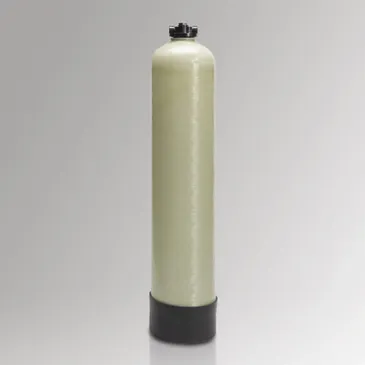
Whole House PFAS Water Filtration
Available in sizes ranging from 8-20 gallons per minute flow rates

SIR-110-HP Resin
Certified WQA (Water Quality Association) Gold Seal

Proudly Manufactured in the USA
Under The Sink (point of use) PFAS Water Filtration
Aries PFAS removal cartridges utilize a high purity strong base anion resin exhibiting an unusually high preference for multiple PFAS compounds. The AF-XX-3612 cartridge filter components are selective for a wide variety of Per- and Polyfluorinated compounds including; PFOS, PFOA, PFNA, PFHpA, PFHxS, PFBS, and HFPO-DA (GenX).
- Highest capacity PFOS & PFOA removal
- Fits Standard Residential & Industrial Size Housing
- Oversized Cartridge for Maximum Media Fill
- Lot numbered for component traceability

Point of Use
Recommend use for under the sink applications.
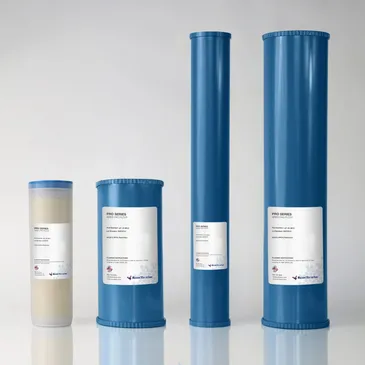
Point of Use / Point of Entry
Multiple sizes for various applications